


10 Mar Brace Yourself. The in’s and outs of Knee Bracing: What works?
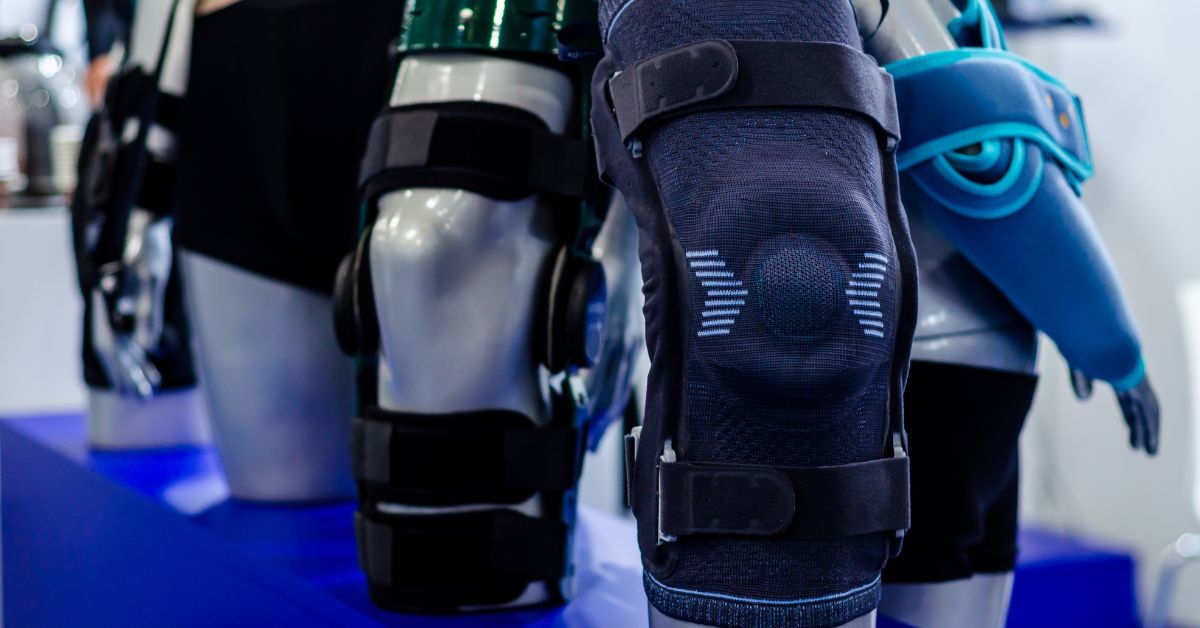
Knee braces are supports to be worn when you have pain in your knee. Some people use them to prevent knee injuries during sports. Although the question might be hard to answer most braces are made from combinations of metal, foam, plastic, or elastic material and straps. They come in many sizes, colours, and designs depending on the injury and future rehabilitation goals.
Some doctors will recommend wearing a brace for knee pain. Other doctors don’t think there is any functional benefits. Scientific research hasn’t given a clear answer, either. I will recommend to always check with your doctor to see what will work best for you.
What are the different kinds of knee braces? Firstly, there are many more than what I mention, I think it will be more informative to dive into what braces are mostly used and their function:
Rehabilitative braces
These are usually used for a period of weeks right after an injury or surgery and preferred by most Orthopaedic surgeons. Their main function is to keep the knee stable but still allow limited movement while it is healing. However, some doctors haven’t seen a benefit from these braces and rarely recommend them.
Functional braces
These give support to knees that have been injured in the past thus serving a protective purpose. Athletes often wear them after a major injury has healed. They stabilize the knee and control motion to prevent another injury. Doctors would often recommend that a patient should use these braces if rehabilitation was not completed, failed or unsuccessful surgery or when rehabilitation outcomes measures was not met. The role of the brace is merely to assist the patients movement and should not been seen as a permanent support structure over the long term in return-to-play athletes.
Prophylactic braces
These are designed to protect knees from injuries during contact sports such as football, rugby, basketball, hockey etc. They have become popular among athletes over the recent years with research proven that they do play a major role in the psychological aspect of an athlete’s game. Research has not proven that they work on a physiological level, but studies are ongoing. Prophylactic braces also assist in rehabilitation in the neuro-psychological dimension and should be aware of the psychological benefits these braces have for athletes, but also be prepared to progress the athlete to full mental readiness without assistive braces.
Unloader braces
These are designed to relieve pain in people who have arthritis in their knees. These braces are ideal for the geriatric population. They shift the weight (“unload” it) from the damaged area of the knee to a stronger area. With this being said, we can assume that these braces would lead to compensation in a patients’ biomechanics. However, these braces primarily strive to save the functionality the patient has left.
Knee sleeves
These are not technically bracing, but they are the most common type of knee support. They are designed to provide compression around the knee joint. This helps support the knee, and can control pain and swelling and are mostly used in acute settings. There is no in-depth research about the long-term effects of using knee sleeves on injuries but research do suggest that they provide benefits in acute settings like direct trauma to the knee (trauma-inflicted-injuries) like a blow to the knee with a hockey stick.
Why it is important to be aware and knowledgeable about knee bracing?
As Biokineticist we are essential exercise rehabilitation specialists. We aim to restore functionality and target deficits so that patients can be pain-free and functional. Some of these braces will pose demands on the exercise rehabilitation prescription as some of them provide great psychological benefits whereas others only work on a functional level research suggest. Being knowledgeable and informed about what type of brace the patient is wearing can lead to information that might benefit the exercise prescription. An example would be like knowing the physical range the brace is set on. Some patients are only allowed to reach certain ranges post-operatively. Knowing this can impact your exercise prescription by imposing demands focused on the deficits caused by the brace like stiffness, decreased range etc.
Sit back and BRACE yourself! You really can’t ever know enough…
Written by: Hanri Lochner