


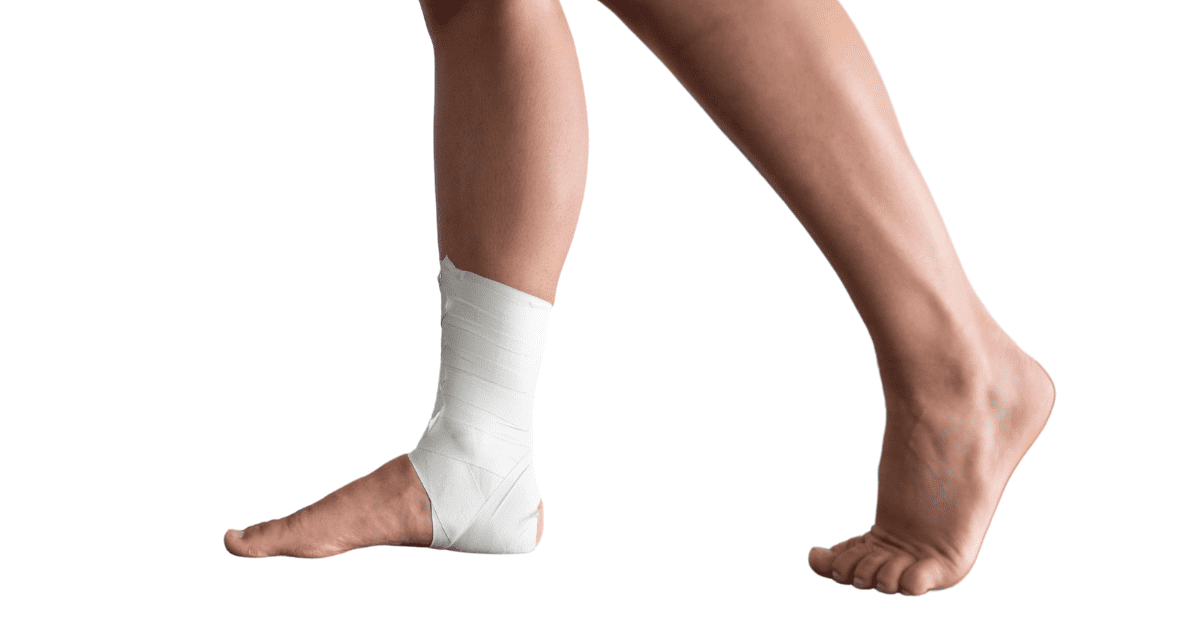
16 Nov Ankle Strains and Sprains: How not being regularly physically active is putting you at risk
It’s a beautiful, sunny Saturday morning after a long and strenuous work week. You decide to go for a run with a friend. Everything was going smoothly, until your foot mis-stepped, rolling your ankle and ending your workout prematurely! “What happened?!” Your running partner asks with worry in their eyes. You reply with which of the following;
A) I’ve sprained my ankle! Or
B) I’ve strained my ankle!
Which is the correct answer and what is the difference? Often, ‘sprain’ and ‘strain’ are used interchangeably, however these clinical terms are used to describe an injury to different anatomical structures. A sprain occurs when one or more ligaments are torn or overstretched. Ligaments are a specialised type of connective tissue which help stabilise the joint, joining bone to bone. A strain is a tear or overstretching in the muscle or tendon. Muscles contract to initiate movement and tendons join the muscles to bone. So, let’s dive into what happened in the jogging incident above, and most importantly why this happened.
Sprains are the most common type of ankle injury with an incidence rate of 85% for acute lateral sprains (Borreani, et al., 2013). The anterior talofibular ligament (ATFL) is the ligament most affected by sprains because of the mechanism of injury. Typically, during a ‘rolled ankle’ motion, the foot goes into plantarflexion (pointing toes away from the face) and inversion (foot deviating toward the midline of the body). This stretches the ligaments on the outside of the ankle, resulting in damage to this area. Strained muscles or tendons that are affected in this type of injury are often those that attach to the outer side of the foot. These muscles initiate the movement that allow you to turn your foot in an outward direction. (Drake, Vogl, & Mitchell, 2015).
This type of injury can affect all individuals, from elite sports people to the ‘weekend warrior’. However, living a sedentary lifestyle with little to no physical activity is a significant risk factor for not only cardiometabolic conditions (e.g., diabetes, hypertension, obesity), but also for the musculoskeletal system. “Sedentary persons have lower levels of neuromuscular fitness than do fit persons, and the associated lack of neuromuscular strength and coordination may increase the potential for injury during the infrequent times they participate in recreational physical activities.” (Hootman, et al., 2002). Therefore, being less physically active will reduce your ability to adapt to external forces, decrease your balance, proprioception (this is the awareness of the limb in space) and coordination. With the weakening of these important neuromuscular factors, the individual is at risk of injuring themselves during less intense activities such as playing outside with the kids, going for a walk or even a light jog.
Diversify your training beyond just the typical strength routine. Include mobility, balance, and proprioceptive training. There are multiple facets to physical fitness, all of which play important roles! To avoid putting yourself at risk of injury, get active and keep moving!
References
Borreani, S., Calatayud, J., Martin, J., Colado, J. C., Tella, V., & Behm, D. (2013). Exercise intensity progression for exercises performed on unstable and stable. Gait & Posture.
Drake, R. L., Vogl, A. W., & Mitchell, A. W. (2015). Gray’s Anatomy for Students. Philadelphia: Elsevier.
Hootman, J. M., Macera, C. A., Ainsworht, B. E., Addy, L. C., Martin, M., & Blair, S. N. (2002). Epidemiology of musculoskeletal injuries among sedentary and physically active adults. Medicine & Science in Sports & Exercise, 838-844.