


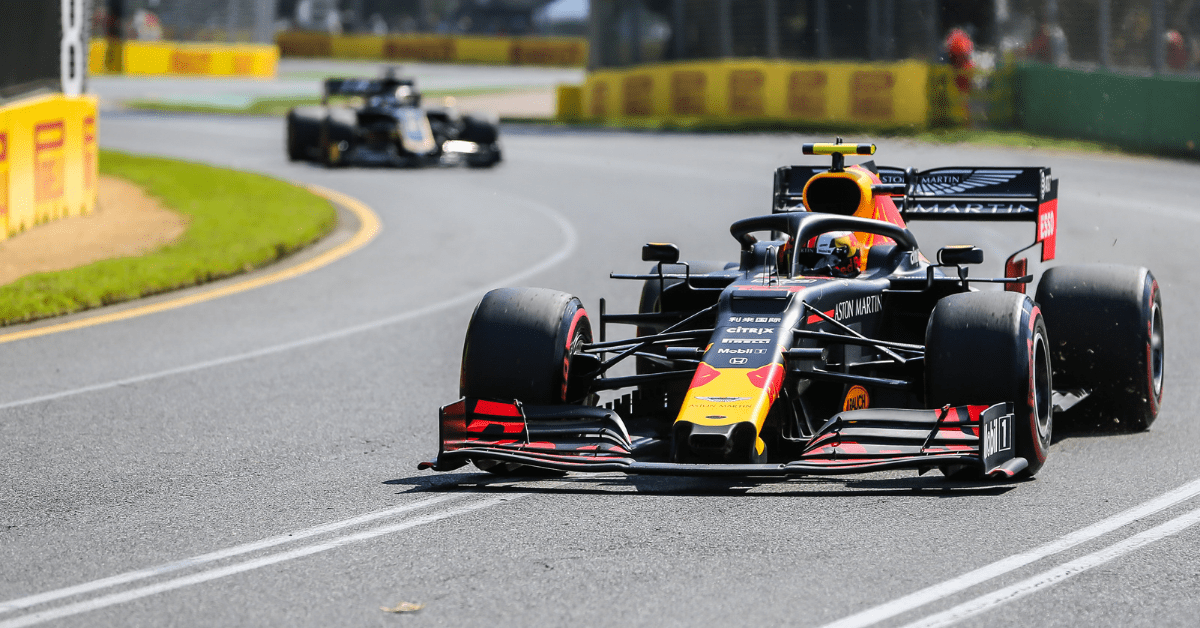
07 May The physical demands and discipline of professional drivers
Picture a professional athlete and racing drivers don’t usually come to mind. I know right! We often do not bear in mind how fitness can influence and impact a drivers ability to perform. To the unexperienced and uninitiated, the act of driving a car might seem like a pretty mild physical pursuit, but at a more elite level, the hosts of “Top Gear” insist that putting the pedal to the metal is a seriously intense experience.
Professional drivers follow the same level of science, training, and nutrition that any other athlete must absorb. As such, the three hosts of “Top Gear,” a show that combines the adrenaline of Formula 1 racing with the excitement of a Demolition Derby, often find themselves pushed to the limits. Not only do professional drivers sharpen their techniques to get the desired results, but they also try to improve their performance through harsh strength-based exercises
Driving an F1 car 300 km/h for about fifty laps, steering a World Racing Championships (WRC) car on surfaces ranging from gravel and tarmac for three to five days, or going through an endurance race for from six to twenty-four hours without a break demands enormous core strength and top-notch muscular endurance. The 24 Hours of Daytona, 12 Hours of Sebring, and 24 Hours of Le Mans are the three most popular endurance races. Did you know, F1 drivers lose about 3-4kg of weight after every race, and WRC drivers burn approximately 5,000 kcal on a single day? It is with no doubt that I believe that the physical condition of the top drivers remains underrated to this day. What exercise components should professional drivers focus on when training?
Neck strengthening to improve peripheral vision:
All professional drivers, regardless of race type, go through neck training to endure extreme forces. When the drivers face fast cornering speeds, the lateral and longitudinal g-forces increase, adding the load on the neck. For example, the Formula One drivers at the Melbourne Circuit in Australia have to bear the load equivalent of up to 6 times their weight.
Neck strengthening exercises are crucial for F1 drivers for their peripheral vision. At first, they lie on their back, lift their head and turn it slowly from left to right. They try and aim for thousands of repetitions. Then, they start to add weights attached to a head harness and raise their heads up. Sometimes they put 40-kilogram plates on the side of their heads.
Peripheral vision and reaction time:
The drivers need extraordinary neuromuscular capabilities for their nervous system to be able to react quickly to stimuli on the track while driving 300km/h. They have to make quick decisions in seconds. Driving at such high speeds requires instant decision-making while controlling a car. The F1 drivers’ reaction time is usually three times faster than that of ordinary people.
There are many different exercises and tools for this. Sometimes the drivers push buttons that light up. Or they stand close to a wall, facing it, as a mate behind them throws a ball at it. Then when the ball bounces off the wall, they’ve got to catch it with one hand. Other sports such as badminton, ping pong, juggling, boxing are also very helpful for improving peripheral vision and reaction time.
Lower body endurance: Training for 1200 brakings
Because of the abrupt braking and accelerating, the imbalances on the drivers’ bodies are very strong. Their legs are extremely important for braking to produce the forces required to control the speed of the car. And they have to repeat that maximal braking throughout the race, which is 1200 times on average, loads of up to 180 kg, for each race.
Even when they are just using the tip of their toes for delicate braking, they need to use their whole legs muscles. Squat, lunge and deadlift are well known for stronger legs. This could increase their body weight as well, though.
Upper body training: Strengthening the shoulder complex for grip
For the drivers who need to endure racing for a long time, having a strong shoulder complex is essential. The shoulder complex is the most important area of a driver’s body, along with the hands and arms, because the shoulders support the arms for steering. The shoulder/arm/hand training decreases the risk of unwanted accidents, which could be life-threatening. An exercise often used is weighted plate rotations and can be done in various angles.
The core is the core:
They also work hard to keep their balance throughout the core movement, stabilizing the core and spine for when they are in their race cars. This is because the core is a strong column that links all the body parts together – arms, legs, and a neck. Maintaining balance is essential for better results.
Just like other athletes, professional racing drivers strengthen their core muscles for balance. Holding a plank on a BOSU ball challenges their balance, engaging stability muscles not only in their core but throughout their upper body as well.
References:
https://www.arrivealive.mobi/mental-health-and-driver-fitness
https://www.polar.com/blog/racing-car-driver-training-regime-will-davison/